
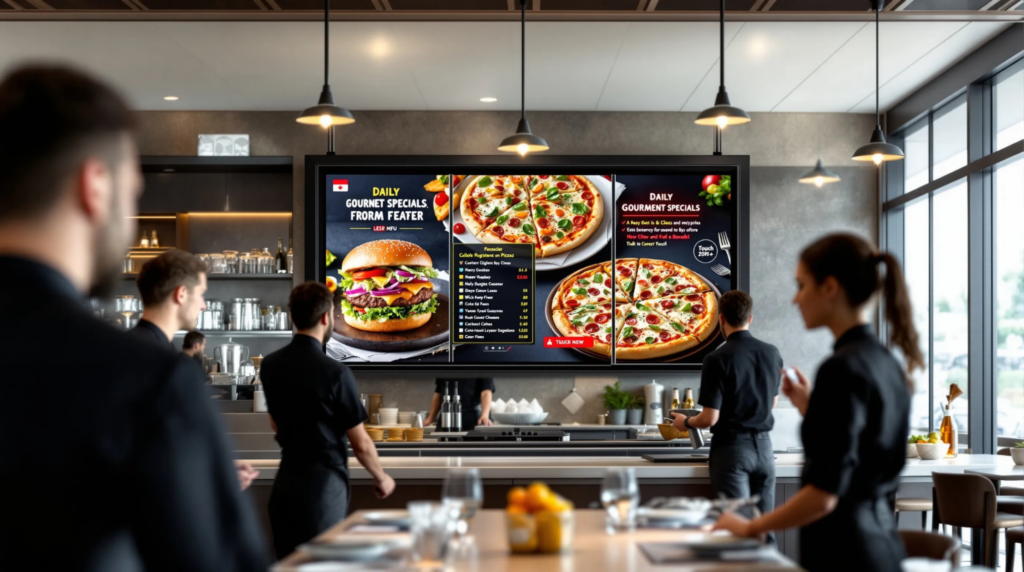
Have you ever walked into a restaurant and found yourself fixated on a dazzling digital menu board, trying to decide between that mouth-watering burger or legendary pizza? We all know the struggle. In today’s fast-paced, tech-savvy world, digital menu boards aren’t just a trendy upgrade: they’re a game-changer for how we view and order food. Join us as we jump into the world of digital menu board design, and discover how these vibrant displays can enhance our dining experiences while boosting efficiency for our businesses.
The Importance Of Digital Menu Boards
Digital menu boards hold a pivotal role in modern dining experiences. Imagine walking into a place where mouthwatering images dance before your eyes on a sleek screen, effortlessly guiding your choices. This isn’t just about aesthetics: it’s about enhancing our customer journey. Unlike traditional boards, which can fade, peel, and become outdated, digital versions allow for instantaneous updates. We can feature daily specials, seasonal dishes, or even nutritional info with a few clicks. This agility means that our menus can stay fresh and relevant, enticing customers to return time and again.
Also, these boards can help streamline operations. By displaying real-time inventory levels, we ensure that we can reduce complaints about items that are out of stock. This clarity can significantly improve customer satisfaction, which is eventually what we all aim for.
Key Features Of Effective Digital Menu Boards
When designing a digital menu board, several features come into play that make them compelling and user-friendly. First off, visuals should be striking. High-resolution images of the dishes are a must: they not only capture attention but also stir hunger, often before customers even step foot inside. We should also consider incorporating animations that highlight special promotions or new dishes, adding a dynamic element that can’t be overlooked.
Interactive elements can further enhance the experience. Think about touch screens where customers can customize their orders right at the display. These features not only engage people but enhance their overall interaction with our brand. Also, it’s beneficial to think about font choices and colors, these elements should reflect our restaurant’s persona while maintaining readability from a distance.
Design Principles For Digital Menu Boards
Designing an effective digital menu board isn’t just an art: it’s a science. Clarity should always come first. We want our customers to find what they’re looking for quickly and easily. Group menu items logically, appetizers, entrees, drinks, creating a flow that makes sense. It’s much like curating a playlist: the order can make or break the experience.
Keep text to a minimum. Aim for concise descriptions that convey essential information without overwhelming. We should prioritize hierarchy in our layout: larger items should catch the eye first, guiding customers toward best-sellers while ensuring they understand secondary options. Consistency in branding is key. Keeping a uniform color scheme and typeface helps in reinforcing our identity.
Choosing The Right Software And Hardware
The hardware and software we choose for our digital menu boards are critical. We need reliable screens that can withstand both indoor and outdoor elements if our dining area spills outside. Consider resolution, high-definition displays can significantly elevate the look of our offerings.
On the software side, we must select systems that are user-friendly for staff management yet powerful enough to handle real-time updates and analytics. Some platforms even allow integration with restaurant POS systems, making it easier for us to keep track of inventory and sales trends. The peace of mind that comes from choosing tools that sync seamlessly can’t be overstated.
Best Practices For Managing Digital Menu Content
Now that we have our digital menu boards set up, maintaining content is where the real magic happens. Regular updates are essential. We want to avoid stale menus, which can give the impression of neglect. Creating a schedule, perhaps weekly updates, ensures our offerings remain current and engaging. We should also test content periodically to see how customers react, adjusting based on their preferences.
Also, it’s wise to engage with seasonal trends. Images of crisp fall salads in September and warm, hearty pastas in winter not only keep our menu lively but create relevance as customers’ tastes evolve. Remember, flexibility is a superpower in this digital age.
Future Trends In Digital Menu Board Design
So, what does the future hold for digital menu boards? Artificial intelligence is creeping in. Imagine systems that analyze customer preferences and predict what they might want based on weather, time of day, or even past orders. This level of personalization can lead to enhanced customer satisfaction and loyalty.
Another exciting prospect is augmented reality. Soon, patrons might look through their phones and view dishes on their tables before ordering, creating an interactive dining adventure like no other. Sustainability is also becoming a focal point: we might see more eco-friendly screens and materials being utilized as environmental consciousness grows.